See Clearly Up Close and Far Away With One Pair of Glasses
If you hold your phone at arm’s length to read it or keep reading glasses in every room, a single pair of lenses can handle near, middle and far vision. At Bellevue Eye Care in Nashville, TN , we fit bifocal, trifocal and progressive lenses to your prescription, your frame and the way you use your eyes every day.
Book OnlineWhy Your Near Vision Changes After 40
Most people start to notice blurry close-up vision in their early to mid-40s. This is presbyopia, a normal age-related change. The lens inside the eye slowly stiffens and loses its ability to change shape and focus on nearby objects. Small print gets harder to read, your eyes may feel tired after close work, and you may need brighter light for tasks that used to be easy.
Presbyopia happens to everyone, including people who already wear glasses for distance. That often means needing two different prescriptions. Bifocal and multifocal lenses combine those prescriptions into one lens, so you don’t have to switch between glasses all day.
What Are Bifocal and Multifocal Lenses?
Bifocal and multifocal lenses hold more than one prescription in a single lens. Bifocals have two lens powers separated by a visible line, usually distance on top and near at the bottom. Multifocals, including trifocals and progressive lenses, add a middle zone for intermediate distances such as a computer screen or a car dashboard. Progressive lenses do this with a smooth, gradual change in power and no visible lines.
Comparing Your Lens Options
| Lens Type | Description | Advantages | Typical Use |
|---|---|---|---|
| Bifocal | Two lens powers with a visible dividing line (distance on top, near on bottom). | Simple design and wide reading area; easy to adapt to. | People who mainly need correction for distance and close-up reading. |
| Trifocal | Three lens zones separated by two lines: distance, intermediate and near. | Adds a clear arm’s-length zone in addition to near and far. | People who spend time on midrange tasks such as computer work or reading a dashboard. |
| Progressive (Multifocal) | No visible lines; lens power changes gradually from distance to near. | Natural look, smooth transitions and no “image jump” between zones. | Patients who want one all-in-one lens for every distance. |
Choosing the Right Lens for Your Lifestyle
The best lens depends on more than your prescription. During your visit, we ask how you spend your day. Someone who reads a lot of paperwork may do well with a wide reading area. A person who works at a monitor for hours may benefit from a strong intermediate zone, which can also help with symptoms of computer vision syndrome. Drivers, hobbyists and active patients each have different needs, and we match the lens design to them.
Your lenses can also correct other refractive errors at the same time, including astigmatism and hyperopia. Popular add-ons include anti-reflective coatings to reduce glare, scratch-resistant treatments and light-adapting lenses that darken outdoors.
It Starts With an Accurate Eye Exam
Multifocal lenses only work well when the prescription and measurements are precise. A comprehensive eye exam confirms your distance, intermediate and near prescriptions. It also checks for conditions that can affect your vision, such as cataracts, glaucoma and dry eye. If your near vision seems to change quickly, the exam helps rule out other causes.
Professional Fitting and Frame Selection
With progressive and bifocal lenses, where each zone sits in front of your eye matters a great deal. Our optical team takes careful measurements of your pupil position and frame fit, so the reading zone lands right where your eyes naturally look down. We’ll help you choose a frame with enough lens height for every zone from our selection of eyewear brands. We also adjust your glasses at pickup and any time afterward.
Adjusting to New Multifocal Lenses
Most patients adapt within a few days to two weeks. To help the process along:
- Wear your new glasses full time instead of switching back to old pairs.
- Point your nose at what you want to see and move your eyes, not just your head.
- Look down through the lower part of the lens to read, and straight ahead for distance.
- Take extra care on stairs and curbs for the first few days.
- Call us if something still feels off after two weeks. A small adjustment often fixes it.
Other Options for Presbyopia
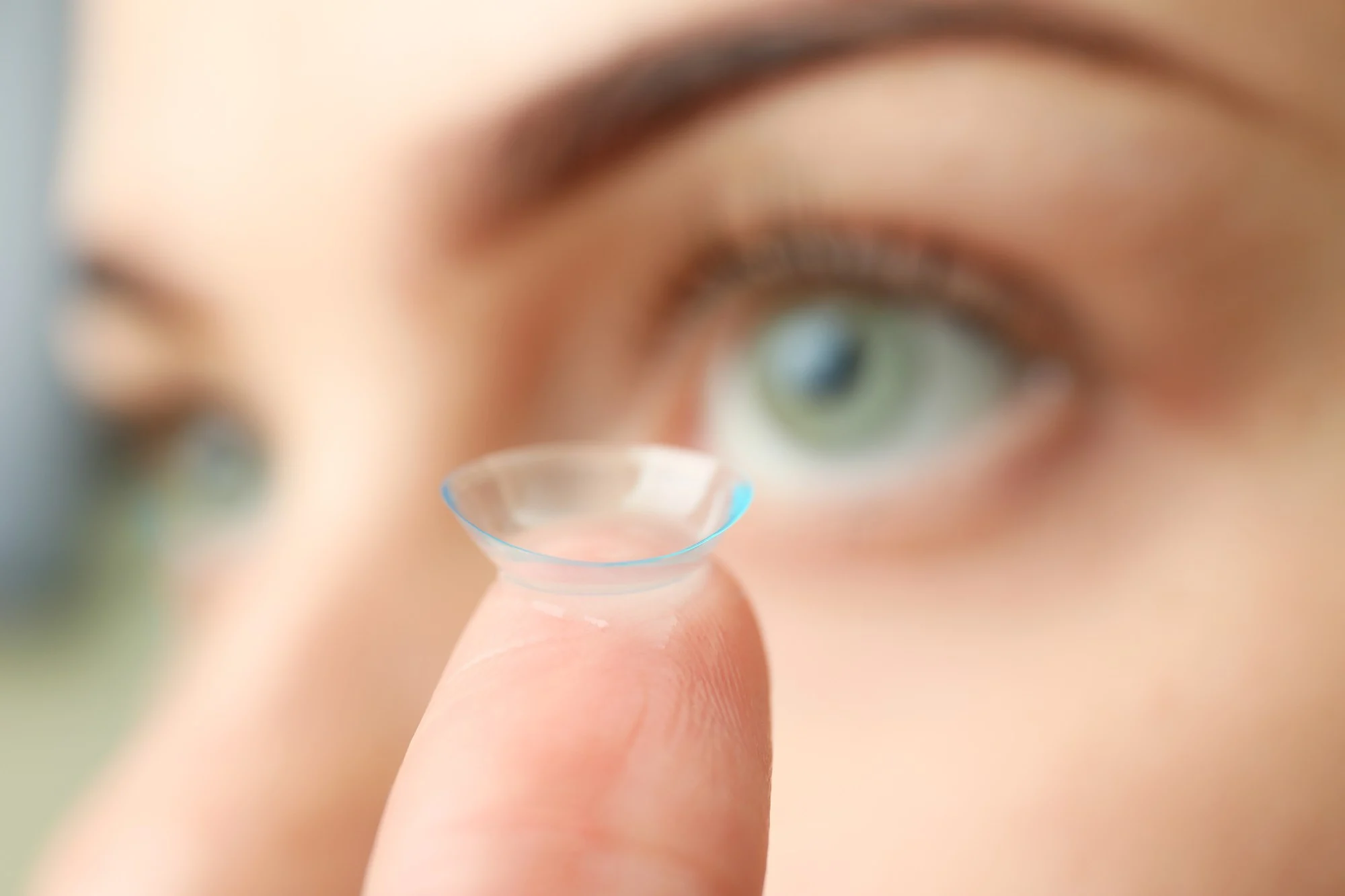
Glasses aren’t the only answer. Many patients prefer multifocal or monovision contact lenses, or wear contacts most days and keep a pair of progressives as a backup. If you have significant vision loss that standard lenses can’t fully correct, our low vision services may help.
Visiting for the first time? Our new patient page explains what to bring, and you can review our payment plans before your appointment. You can also meet our team or learn why patients choose us.
Bifocal and Multifocal Lens FAQs
What is the difference between bifocal and progressive lenses?
Bifocals have two prescriptions separated by a visible line, one for distance and one for near. Progressive lenses have no lines and change power gradually, with an extra intermediate zone for things like computer screens.
How long does it take to get used to progressive lenses?
Most people adjust within a few days to two weeks. Wearing your new glasses full time speeds up the process. If you’re still uncomfortable after two weeks, we can check your measurements and fit.
At what age do people usually need bifocals or multifocals?
Most people start to notice presbyopia in their early to mid-40s. Some notice it a bit earlier or later, depending on their prescription and how much close work they do.
Can multifocal lenses also correct astigmatism?
Yes. Bifocal, trifocal and progressive lenses can include correction for astigmatism, nearsightedness and farsightedness, along with your reading prescription.
Are multifocal lenses good for computer work?
Progressive lenses and trifocals include an intermediate zone that works well for screens. If you spend long hours at a computer, a dedicated office or computer lens may be even more comfortable. We can help you decide.
Can I wear contact lenses instead of bifocal glasses?
Many people can. Multifocal and monovision contact lenses are options for presbyopia. A contact lens fitting will tell you whether they’re a good match for your eyes and daily routine.
Do I need an eye exam before ordering multifocal lenses?
Yes. Multifocal lenses need an accurate, current prescription for each distance, plus precise fitting measurements. An eye exam also checks your overall eye health.
Stop Juggling Reading Glasses
Book an exam with Bellevue Eye Care and find out which bifocal, trifocal or progressive lens fits your vision and your day. Call (615) 662-7588 or schedule online.