Relief for Itchy, Watery, Allergy-Prone Eyes
When pollen, pet dander, dust or mold set off your allergies, your eyes often take the hardest hit. Allergic conjunctivitis causes itching, redness, swelling and tearing that can make work, driving and screen time uncomfortable. At Bellevue Eye Care in Nashville, TN , our eye doctors confirm that allergies are the cause, rule out infection and other conditions, and build a treatment plan that calms your symptoms and helps keep them from coming back each season.
Book OnlineWhat Is Allergic Conjunctivitis?
Allergic conjunctivitis is inflammation of the conjunctiva, the thin, clear membrane that covers the white of the eye and lines the inside of the eyelids. When an allergen lands on the eye, the immune system overreacts and releases histamine and other chemicals. Blood vessels swell, nerve endings become irritated and the eyes begin to itch, redden and water. Unlike viral or bacterial conjunctivitis, allergic conjunctivitis is not contagious, and it usually affects both eyes at the same time.
Middle Tennessee is known for long, intense pollen seasons, so many of our patients notice symptoms every spring and fall. Others react year-round to indoor triggers such as dust mites, pet dander and mold.
Types of Eye Allergies
- Seasonal allergic conjunctivitis: Triggered by tree, grass and ragweed pollen, flaring at predictable times of year.
- Perennial allergic conjunctivitis: Year-round symptoms from indoor allergens such as dust mites, pet dander and mold spores.
- Contact allergic conjunctivitis: A reaction to contact lens solutions, eye drop preservatives or cosmetics. Patients who wear contact lenses may also develop giant papillary conjunctivitis, which causes bumps under the upper eyelid and lens intolerance.
- Vernal and atopic keratoconjunctivitis: Less common, more severe forms often linked to asthma or eczema that can affect the cornea and need closer monitoring.
Common Symptoms
- Intense itching, often the hallmark sign of an eye allergy
- Redness in the whites of both eyes
- Watery eyes or excessive tearing
- Puffy, swollen eyelids
- Burning or a gritty feeling
- Light sensitivity and blurry vision that clears with blinking
- Sneezing, congestion or a runny nose along with eye symptoms
Some of these symptoms overlap with dry eye, keratitis and corneal abrasions. Pain, thick discharge, significant light sensitivity or a change in vision are not typical of allergies and should be checked promptly.
How We Diagnose Eye Allergies
During your visit, we review your symptoms, when they flare and what you are exposed to at home, at work and outdoors. Using a slit lamp microscope, we examine the conjunctiva, eyelids and cornea for the swelling, small bumps and tear film changes that point to an allergic reaction. This careful look lets us separate allergies from infection, dry eye and other surface problems so you receive the right treatment the first time. If you are overdue for a full checkup, we can combine this evaluation with a comprehensive eye exam.
Treatment and Prevention
Most patients do best with a combination of trigger control and medication matched to the severity of their symptoms.
- Reducing exposure: Keep windows closed on high pollen days, run an air purifier, wash bedding often, shower after time outdoors and keep pets out of the bedroom.
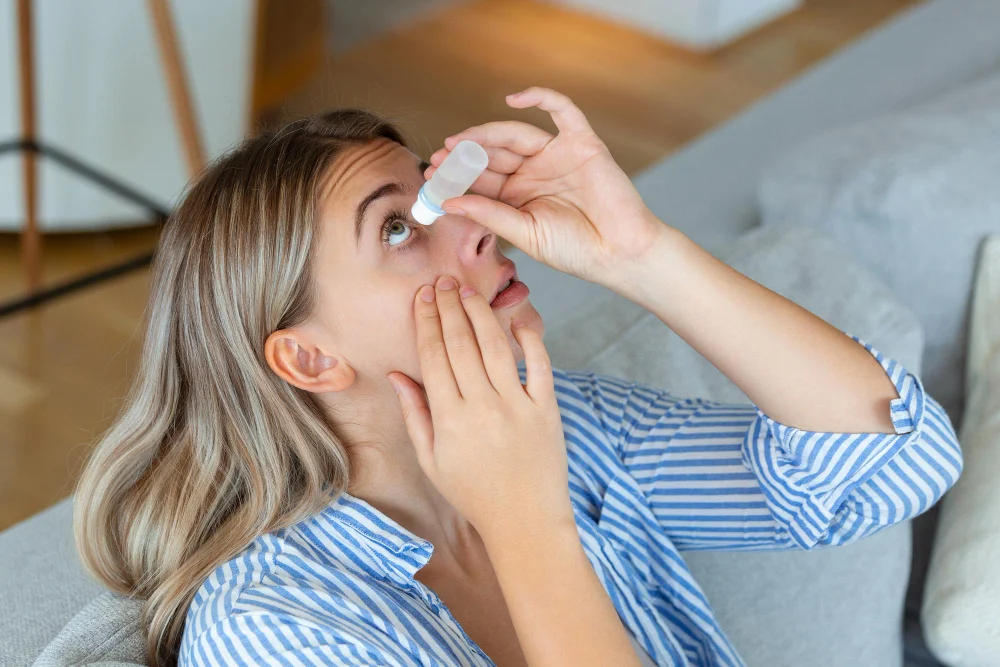
- Preservative-free artificial tears: Rinse allergens from the eye surface and soothe irritation.
- Antihistamine and mast cell stabilizer drops: Dual-action drops relieve itching quickly and help prevent future flare-ups when used consistently through allergy season.
- Prescription anti-inflammatory drops: Short courses of steroid drops for severe flare-ups, used under our supervision with eye pressure monitoring.
- Cool compresses: Reduce eyelid swelling and calm burning.
- Contact lens adjustments: Switching to daily disposable lenses or a different care system can reduce allergen and protein buildup.
| Treatment | Best For | Benefits | Considerations |
|---|---|---|---|
| Allergen Avoidance | Every patient | Safe, low cost, prevents flare-ups | Hard to avoid triggers completely |
| Artificial Tears | Mild symptoms | Gentle, flushes allergens away | Short-lived relief on its own |
| Antihistamine / Mast Cell Drops | Moderate or seasonal symptoms | Fast itch relief and prevention | Works best when used daily in season |
| Prescription Steroid Drops | Severe flare-ups | Strong control of inflammation | Requires monitoring by your eye doctor |
| Oral Antihistamines | Nasal and eye symptoms together | Treats the whole allergic response | Can dry the eyes or cause drowsiness |
Eye Allergies in Children and Screen Users
Children rub itchy eyes often, which worsens swelling and can scratch the cornea. If your child struggles with seasonal eye irritation, we can address it during pediatric eye exams. Adults who spend long hours on devices may find that allergies and computer vision syndrome make each other worse, since reduced blinking leaves allergens on the eye longer.
Why Patients Choose Bellevue Eye Care
Our eye doctors take time to pinpoint your triggers and recommend treatments that fit your lifestyle, from simple daily habits to prescription options. Learn more about our team, explore our full range of eye health services, or see what to expect as a new patient. We also offer flexible payment plans to make care more accessible.
Allergic Conjunctivitis FAQs
Is allergic conjunctivitis contagious?
No. Allergic conjunctivitis is caused by your immune system reacting to an allergen, not by a virus or bacteria, so it cannot spread to other people. Viral and bacterial pink eye are contagious, which is why an accurate diagnosis matters.
How can I tell if my red eyes are from allergies or an infection?
Allergies usually cause itching in both eyes, watery discharge and often sneezing or congestion. Infections more often cause a gritty feeling, thick yellow or green discharge, crusting in the morning and may start in one eye. An eye exam is the most reliable way to know.
Are over-the-counter allergy eye drops safe to use?
Many antihistamine drops are safe for short-term use, but “get the red out” decongestant drops can cause rebound redness with regular use. We can recommend the right drop for your symptoms and tell you when a prescription option would work better.
Can I keep wearing contact lenses during allergy season?
Many patients can, especially with daily disposable lenses that are replaced before allergens build up. During a bad flare-up, switching to glasses for a few days often helps your eyes recover faster.
Why do my eyes itch more in spring and fall?
Tree and grass pollen peak in spring, and ragweed peaks in late summer and fall. The Nashville area has long growing seasons, so pollen counts stay high for many months, which keeps seasonal eye allergies active.
Can rubbing my eyes make allergies worse?
Yes. Rubbing releases more histamine, increases swelling and itching, and can scratch the cornea. Frequent, hard rubbing has also been linked to keratoconus. A cool compress and lubricating drops are better ways to calm the itch.
When should I see an eye doctor for eye allergies?
Schedule a visit if symptoms last more than a few days, return every season, interfere with contact lens wear or do not improve with over-the-counter drops. Call right away if you have eye pain, light sensitivity or changes in vision.
Get Ahead of Allergy Season
You don’t have to put up with itchy, watery eyes every time the pollen count climbs. Call Bellevue Eye Care at (615) 662-7588 or request an appointment online, and let our team help you find lasting relief in Nashville, TN .